
Episode · November 3, 2026
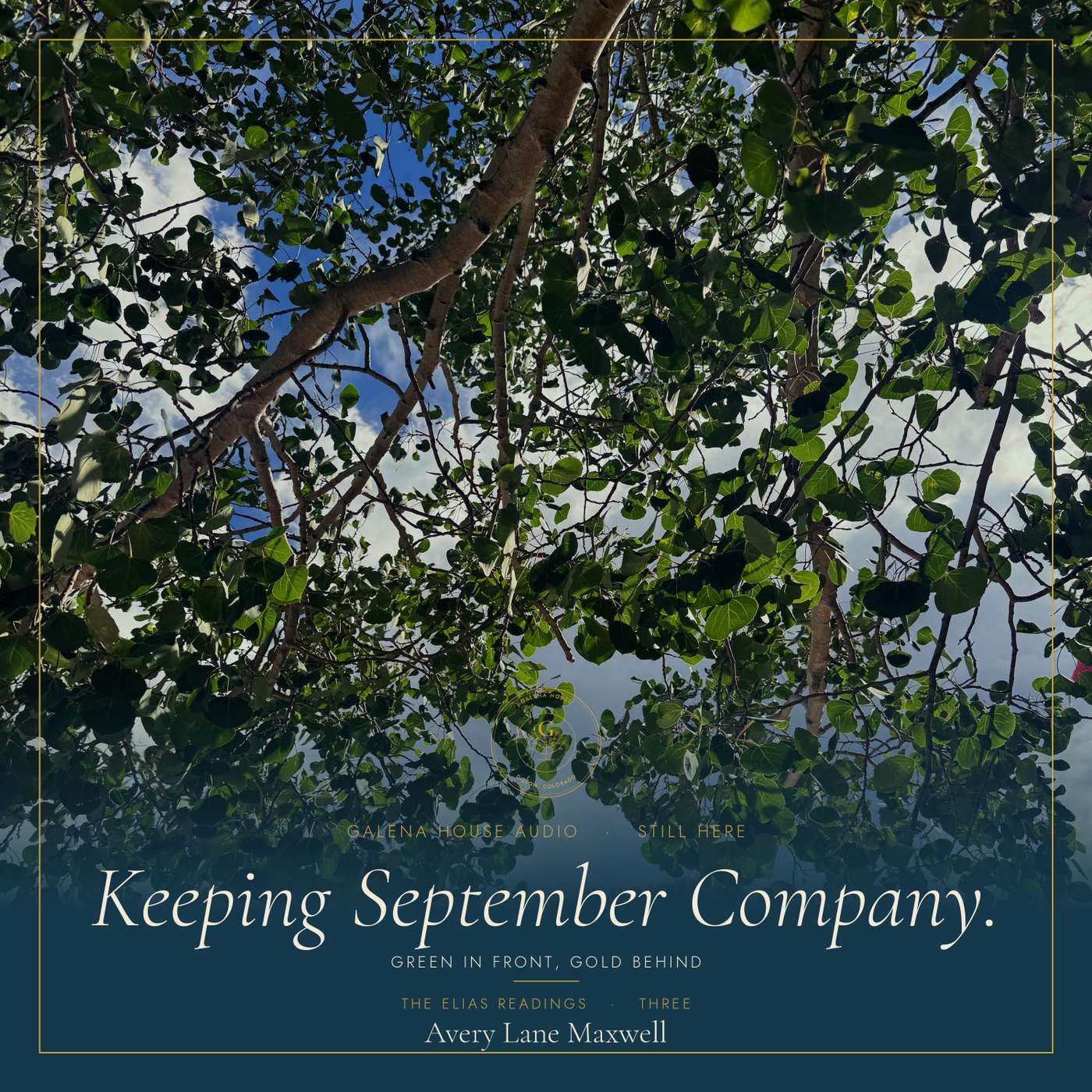
The film
Still Here, No. 3: Keeping September Company
Listen
STILL HERE
No. 3 of 5
KEEPING SEPTEMBER COMPANY
The aspens are louder than they look. Elias walks the creek as the valley turns gold and finds one green leaf that will not hurry, and August asks what it would mean to keep something company instead of keeping it. Green in front, gold behind. Both.
Still Here. is five readings from the house: Elias, read aloud by Avery Lane Maxwell. Every episode, and the films: averylanemaxwell.com/podcast · the letters: averylanemaxwell.com/letters
♫ The Lamp On, the music under these readings: averylanemaxwell.com/the-lamp-on
The book: Still Here., the first in Come In., with its audiobook and album, out 1 November: averylanemaxwell.com/still-here
A note from the house: this is a personal podcast. Avery tells these stories as he remembers and understands them, from his own life and perspective. When other people wander into them, he protects what belongs to them.
The essay, as it was read
This is Still Here, the third reading from the house.
There is a kind of person who tries to hold on to every good thing, as if letting a season change were the same as losing it. I am that person, mostly. This one is about another way.
It's called Keeping September Company. Elias, a creek, a valley turning gold, and one green leaf that would not hurry. Come in.
The leaves were louder than they looked. Elias forgot that every year.
He heard them before he saw them, coming down the porch steps at a little after four on the last Tuesday of September with nothing in his hands but his phone and no reason to have brought it.
From the porch the aspens along the creek looked the way they looked on the postcards in the rack by the front desk, the ones the guests bought three at a time and never mailed: gold against blue, arranged, polite.
But down the street, and across, and along the path that ran beside the water, they were not polite at all. They knocked together. They trembled.
They turned their silver undersides to the wind and back again, all at once, so that the whole grove looked anxious even though nothing at all was wrong.
He liked them for it. It was one of the few things in the valley that behaved the way he did.
He went down to the creek, past the corner and the footbridge, to a place where the path bent and a flat rock sat half in the water. He had not come to do anything.
He had the phone because he always had the phone, and because, lately, he had begun to suspect that the times he had nothing to say were the times he said the truest things.
What he kept that afternoon, for a few minutes, was a creek bank in the last week of September, and one green leaf.
The creek was moving fast and clear and cold.
The trees on the far bank were yellow, mostly, and the near ones were yellow, mostly, and a few had gone that pale, almost white color aspens go when the light comes through them from behind, so that each leaf looks lit from inside like a paper lantern.
He crouched low on the bank.
He wanted the water and the trees together in the picture, the moving and the trembling, and to get both he had to get down almost to the level of the rocks, one knee in the cold mud, the phone held out over the stones.
When he looked at the little screen, there was a leaf in the way.
It hung from a low branch very close to the lens, so close it was soft at the edges, and it took up more of the picture than it had any right to. And it was green.
Behind it, everything had gone over: gold, yellow, the lantern white. But this one leaf, right in front, close enough to touch, was the full flat green of the middle of July. Late to the meeting. Completely unconcerned.
His hand went to move it. Of course it did. He had spent his whole working life moving the thing that was in the way: the chair a quarter inch, the wilted stem out of the vase before anyone came down. It was practically the job.
And then he did not move it.
He did not know why, in the moment.
He only knew that the picture with the green leaf in it was truer than the picture without it would have been, and he let it hang there, and he pressed the red circle, and he held the phone very still and let it run.
The water went by behind the leaf. The gold trembled. The leaf hung there, green, and turned a little in the air, and turned back.
A few weeks earlier only a few trees had started, deciding early, the way one guest always comes down before the others. Now the whole valley had decided. It was almost rude, how fast it went in the mountains.
You spent the spring waiting for summer. You spent the summer quietly convinced it would go on forever. And then one morning someone had changed the lighting. There was frost on the porch rail where there had been none the day before.
The sun still looked warm through the lobby windows, and then you stepped outside and found that the sun had become decorative.
Everyone said it every year, at the front desk, signing the card, shaking their head: it went fast this year. Nobody, as far as he could tell, was keeping records.
But it had. It had gone fast. Maybe everything did, once you had learned how to love it.
He had been trying, that autumn, not to make the season mean too much.
This was hard for him. Give him ten quiet minutes and good lamplight and he could turn a chair left facing the wrong way, or a cup someone had not finished, into a long, careful, four part reflection on the human heart.
He ran an inn. It was close to a requirement.
So he had been practicing restraint. The trees were changing because it was autumn. That was allowed to be enough. No aspen, as far as he knew, had ever turned to another aspen and announced that this season it was choosing itself. They were trees.
It got cold. Something in them knew what to do.
He found that more comforting than any lesson. One branch, then another. And one leaf still bright green in front of the camera while everything behind it had already become October.
It was more useful to him than letting go. He was not good at letting go. He did not even like throwing away boxes.
There was a good box in the cellar with a lid that fit properly, and three times he had carried it to the bins and three times carried it back. It might become important. It closed properly.
There were changes in your own life that other people could see long before you could. You were the last green leaf in the picture, still insisting it was August.
He stopped the recording. He did not stand up yet. He sat back on the flat rock instead, with the cold of it coming through his trousers, and watched the creek.
He did not feel sad. That surprised him a little. There had been years when to notice that something was changing was the same as to begin grieving it.
If a thing was beautiful he would become aware, almost at once, that it could end, sometimes while it was still happening, which was a very reliable way to miss a beautiful thing completely.
He had sat inside perfect afternoons on that porch and begun mourning five o'clock. He had ruined whole Septembers thinking about February.
He did not do that today. He noticed the yellow. He noticed the green. He noticed the sun breaking on the water in small bright pieces, and he did not ask any of it to last.
It felt new. Not profound. Just new. Profound was the kind of thing you framed and hung in the hall. New was the kind of thing you practiced.
The water was cold. He could tell without touching it. Mountain water had a look, once the year began turning. In July it invited you in. In September it looked like it had other plans. It went around the rocks, mostly. Over some.
He felt a philosophy trying to form itself out of that, and declined it, politely.
A few leaves had come down on the bank. Not many. That was the other thing he always forgot. The beautiful part came before the bare part. A green hillside could disappear into itself. Gold could not.
Gold caught every scrap of light there was and threw it back, so that a tree became more visible, more itself, in the last weeks before it stood empty.
He did not know what to do with that yet. So he left it where it was, on the bank, with the fallen leaves. Some things could sit on the counter overnight.
The cold had got into his hands by the time he came back up the porch steps, and when he opened the door the warmth of the lobby came into his fingers like something poured. He would not have felt it at all if he had stayed in.
The lamps were lit. Alyssa had done it: the low lamp by the piano, the green shaded one in the library. The overhead was off. Overhead light, he had always thought, had done enough damage.
From the kitchen came the smell of onions going soft in butter.
She had the big pot on the back burner and the window over the sink fogged at the bottom edge, and she was singing half of something, with a wrong line in the middle that she seemed to prefer to the right one.
She stopped when he came in and looked at his face and then at the knee of his trousers, which was dark with creek mud.
"You were down at the water," she said. "For a few minutes." "You took a picture." "A video." "Of what?" He thought about it. "Nothing happens in it," he said.
She looked at him a moment longer. Then she turned back to the pot. "Good," she said. "Wash your hands. You can do the squash."
So he washed his hands, and the water from the tap stung them, and he dried them on the towel over the oven door, and he did the squash.
It was the September soup. The kitchen made it once a year, in the last week of the month, on the first evening cold enough to want it. It was not complicated. That was the point of it.
A big squash, peeled and cut into pieces the size of a thumb joint. Two onions going soft in a good knob of butter, slowly, on low, never browned. A couple of carrots.
A potato, for the body of it, so it would hold together without cream. Garlic, late, so it did not burn. Then stock to cover, and a bay leaf, and the lid half on, and then you left it alone.
That was the part he was bad at.
He cut the squash on the board by the window. The knife went through the orange flesh with a sound like stepping on new snow.
The seeds came out in his fingers, cold and slippery, and Alyssa held out a bowl for them without a word. Outside, past the fogged edge of the glass, the light was going amber on the street.
"Smaller," Alyssa said, without looking. "Or it won't be done when we are." He cut them smaller.
She tipped them into the pot with the onions and stirred, and the kitchen filled with the smell of it, sweet and a little earthy, like a field after the harvest. She added the stock. She put the lid half on.
"Now what?" he said. "Now nothing. Forty minutes. Go do something else."
He did not go do something else. He rinsed the seeds in a sieve and picked the strings out of them and spread them on a towel to dry, which she had not asked him to do and did not stop him doing. Then he stood at the window.
It was that hour of the year, and of the day, when the windows were still bright but the rooms had begun glowing back at them.
Outside was gold. Inside was amber.
And for a few minutes the glass held both: the trees on the far side of the street, and the porch rail, and the late light on the snow up on Mount Royal, and over all of it, faint, a man in a kitchen with a towel over his shoulder, neither one quite clear.
He thought he liked the world best at that hour. Nothing had fully decided what it was yet. Day, but almost evening. Warm, but cold the moment you opened the door. September, but October already standing on the porch with its hand raised to knock.
He thought of the little cards that hung on the guest room doors, which he had turned a few thousand times. Vacant. Occupied. How much easier the administration of a life would be if it worked like that.
I am finished with that; now I am this. I lived there; now I live here. I was one man; now I am another. Flip the card.
But people were not hotel doors. He thought people were more like the trees across the street. Halfway. Several colors at once. A little ahead in one place, still entirely green somewhere else.
And maybe, he thought, we would be gentler with ourselves if we stopped calling that inconsistency and started calling it September.
August came in through the back with the watering can, from the thyme's second drink of the day, smelled the soup, and said, "Is it that time already?"
"It went fast this year," Alyssa said, deadpan, and Elias laughed out loud, and August looked from one of them to the other and did not know why, and sat down at the kitchen table anyway and folded his hands.
Elias set the table for three, the bowls warmed in the low oven.
Alyssa fished out the bay leaf and stood back from the steam. Then she did the part he always watched for.
She took the pot off the heat and ran the stick blender through it, slowly, tilting the pot, until it was smooth and thick and the color of the light outside the window. She tasted it. She salted it. She tasted it again.
Meanwhile the seeds went into the little pan at the back with a few drops of oil and a pinch of salt, shaken over the flame until they began to pop, and at the very end she cracked black pepper over each bowl and scattered the seeds on top, so they sat on the surface like the first leaves on a still pond.
"Eat it while it's hot," she said. "It's only like this for about ten minutes." They ate it while it was hot. August ate slowly, the way he did everything. Halfway through he put his spoon down. "She says you took a picture of nothing."
Elias handed him the phone. August pushed his reading glasses down out of his hair and held it at arm's length and watched the whole thing through, the water and the gold and the green blur at the front of it.
"There's a leaf in the way," he said. "I know."
August watched it again. Then he gave the phone back and picked up his spoon and said nothing else about it, and the boiler came on in the cellar with its low breath, and the three of them finished the soup.
At eight he stood in the kitchen doorway with his coat on and one hand on the frame, the way he did before he went home. He looked at the phone face down by Elias's bowl.
"What would it mean," August said, "to keep something company, instead of keeping it?" Then he said good night to them both and went.
After the dishes, with the pot soaking in the sink, Elias went through to the lounge. On the way he passed the framed photograph of the Inn fifty years ago, and stopped, the way he always stopped.
The building was the same. The porch, the windows, the line of the roof against the mountain. The people on the steps were laughing at something just outside the frame, before any of them knew what the afternoon would turn into.
The photograph could not tell him what happened five minutes later, or whether anyone in it was happy for a second or a year. It kept the light. That was all it kept.
Memory did the same thing. It was not interested in updates. It kept people where the light was good.
There were people out in the world who had known him in one season and would hardly recognize him in another, who carried a version of him that no longer lived anywhere. He surely did the same to them.
Maybe that was enough. The word had a poor reputation. People heard it and thought settling, less. But it could also mean this does not need anything more from me. This afternoon does not need a future in order to have mattered.
This tree does not have to stay gold for gold to have happened.
Gold happened. Today. He had seen it. He sat in Plato's Corner with the low lamp and watched the video.
It was not extraordinary. A thousand people in the valley that week were taking almost the same video, and somebody had already laid piano music over theirs.
His was a phone held low by a creek. There was a leaf in the way. The water went by behind it. The trees moved. Nothing happened. He watched it three times. He loved it. Nothing happened.
He had spent so much of his life waiting for something to happen. A move. A person. An answer. One great clean moment that would divide everything into before and after.
And almost none of the moments he remembered best had known they were important when they were happening. Someone laughed. Someone opened a window. The rain started. A guest stayed at the desk fifteen minutes longer than she meant to. A tree changed color. He looked up.
That was most of a life, he thought. The looking up.
He went out onto the porch before bed, in his shirtsleeves, though it was cold.
There was a pull, this time of year, to hurry toward the warm part. The pumpkin on the step. The fire in the lobby. Soup. He loved the warm room. He had built half his life around it.
But he wanted to stay out a little longer.
There was something in the minute before you went inside. Cold on your face. Your hands beginning to ache. The smell of leaves and wet earth coming up from the creek.
You stood there a little longer than you needed to, with the warm room right there behind the door, because you knew you would miss this exact cold once you were in.
Maybe that was the whole trick, he thought. To know you were going to miss something, and stay with it anyway. Not cling to it. Stay. Clinging asked the moment not to leave. Staying said: I am here until you do.
He had not been trying to keep September, down at the creek. He knew that now, standing where August had stood with the watering can. He had been keeping it company. For a few minutes. The creek kept going. The aspens kept moving.
The light kept changing on the water. And the green leaf had hung there in front of the lens, and he had let it.
By next week some of those branches would be bare. Someone at the front desk would say winter came early. The green leaf would be gone.
That was all right. He had the video. But more than that, he had been there. Those were different things. Having the evidence, and having been there. The older he got, the more he wanted the second one.
Inside, he went to the desk and turned on the lamp. The microphone was on its stand at the corner, where it had been all summer. He opened the ledger, and uncapped the pen, and under the date, the nib loud in the sleeping house, he wrote:
Went down to the water. Left the leaf in. Up in the tower room the radiator knocked three times, and settled. He wrote, smaller, underneath: Kept September company.
He capped the pen. And then, after a moment, because it was true and because no one would ever read it but him, he uncapped it again and added one more line at the very bottom of the page, where the paper was still clean:
Green in front. Gold behind. Both.
That was Keeping September Company.
You don't have to choose between who you were and who you are becoming. You can be green in front and gold behind, both at once, and both of them are you. Nothing about you is late.
I'm Avery Lane Maxwell. This is Still Here, from Galena House Audio. Keep something company this week, and let it change while you sit with it.
More episodes
Every episode
Episode · November 4, 2026
The Brightness Stays
I have made a pumpkin muffin with chocolate chips and a sweet cream-cheese middle. I have named it October's Last Kiss. November will have to manage.
Episode · November 3, 2026
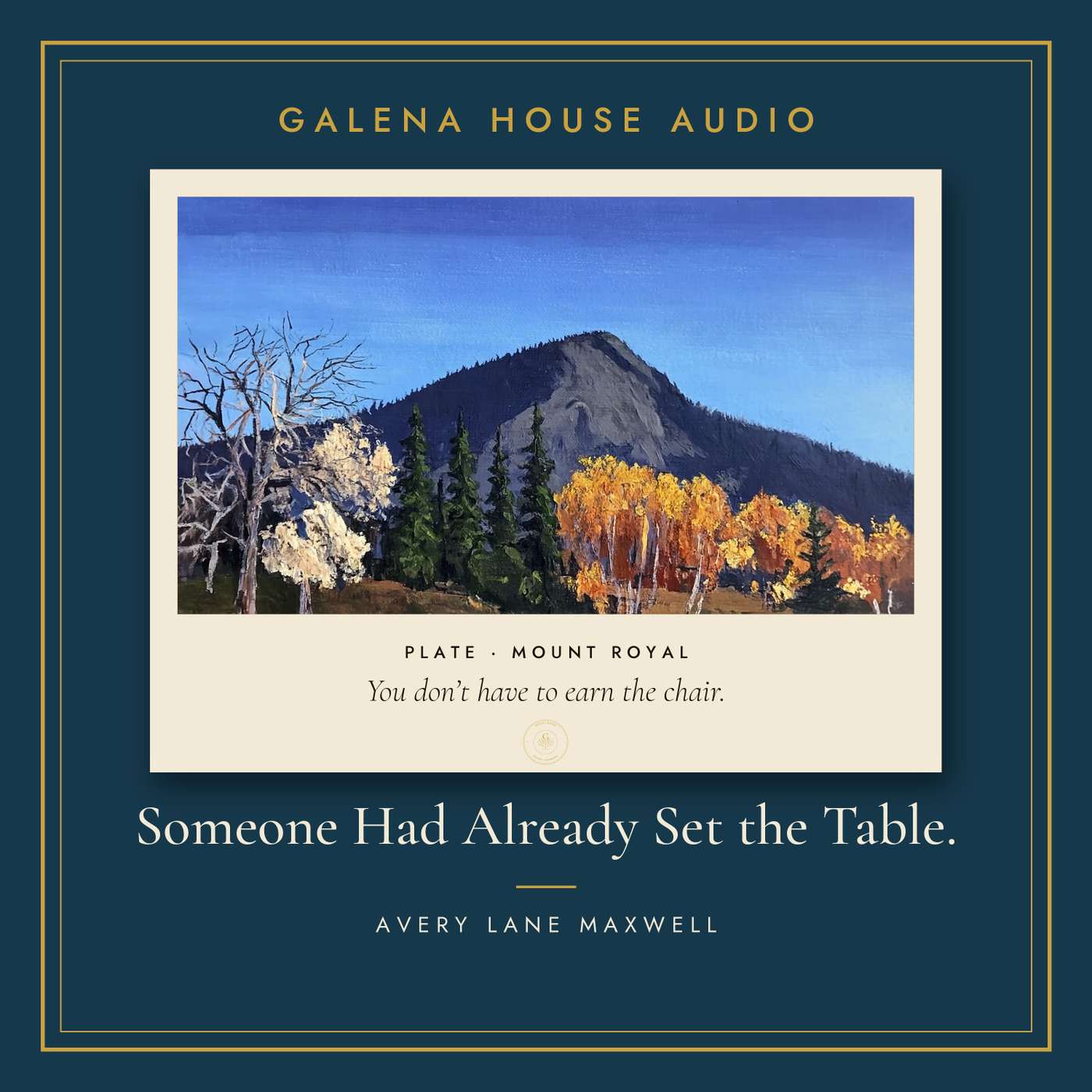
Someone Had Already Set the Table
Pull up a chair. Take the one by the window. The first snow in Frisco can't decide whether it's staying, and three things are waiting for you in this room: a table somebody else set, a little blue bowl that is going to s…
Episode · November 2, 2026
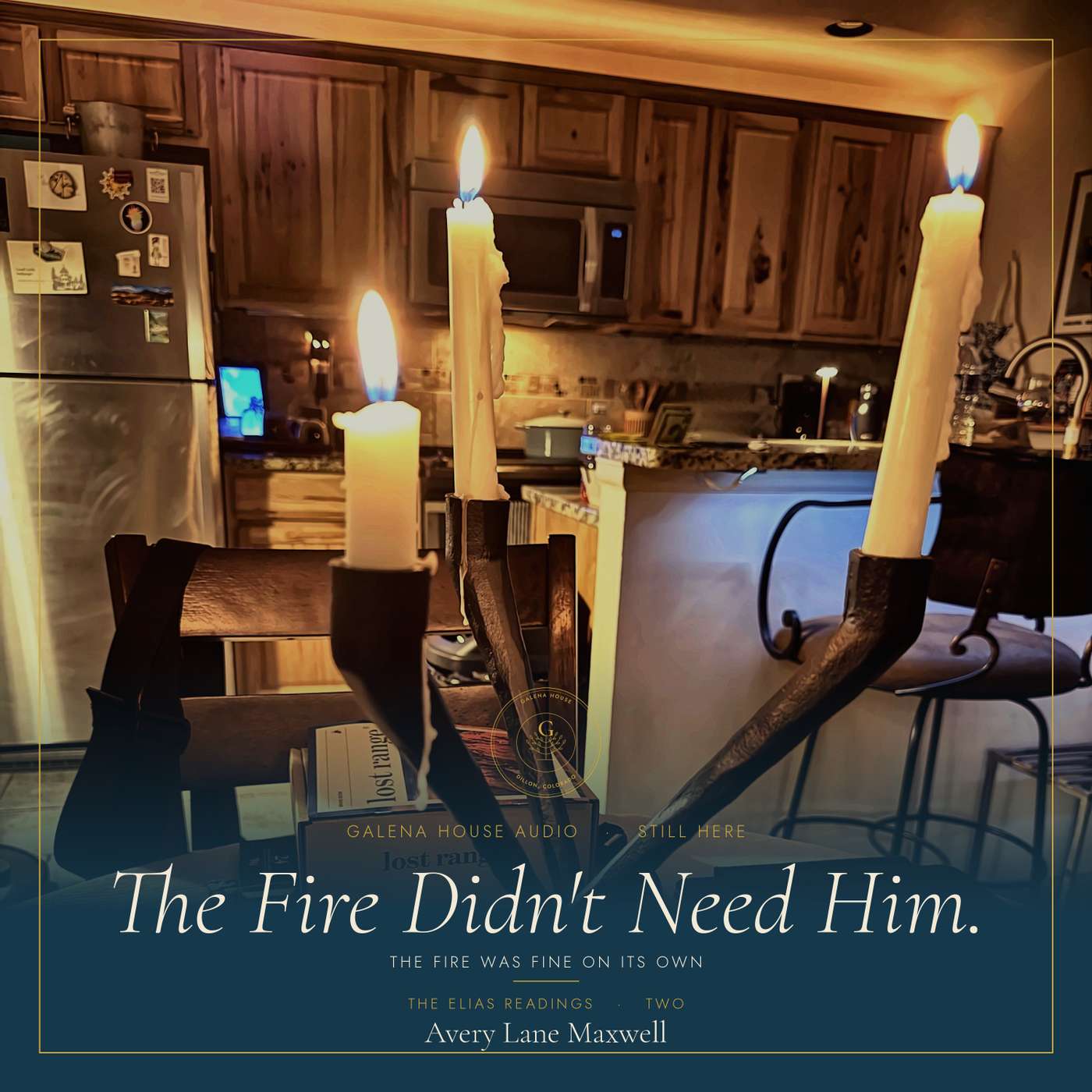
Still Here, No. 2: The Fire Didn't Need Him
STILL HERE No. 2 of 5 THE FIRE DIDN'T NEED HIM A fire caught on the second match, scones folded twice and not four times, a forgotten order of eggs, and the old voice that says leave.